



Welcome to My Kids Vision.
The complete resource for parents to help manage childhood myopia, and protect their child’s vision.
All About Myopia.
Myopia, often called short-sightedness or near-sightedness, is a condition of the eyes that results in blurry long-distance vision. A person with myopia can see clearly up close, such as when reading a book or looking at a phone, while distant objects like store signs or television screens may appear blurry or hard to read.
Growing rates of myopia in children are a global health concern, with over 50% affected in many countries and half the world predicted to have myopia by 2050.
Higher levels of myopia are associated with a higher risk of eye disease in adulthood, so it’s important to monitor your child’s eye health and ensure that any symptoms of myopia are checked by an eye care professional.
Special types of corrective glasses or contact lenses are the usual course of action to treat myopia in children. They should be used alongside implementing changes to your child’s habits and daily activities to slow down the worsening of the condition.
Myopia Control Product Compendium.
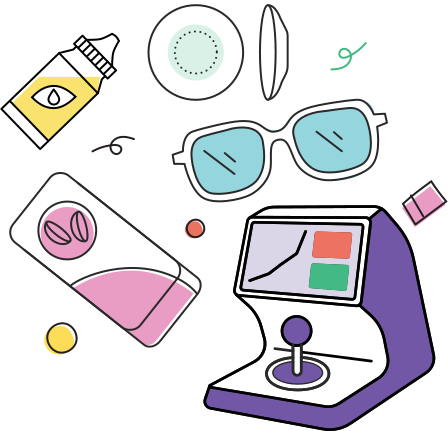
This is the first resource in the world to bring together simple articles alongside clear information about myopia control products for children and teenagers.
It covers options like special spectacle lenses, soft contact lenses, orthokeratology, atropine eye drops, and instruments used for treatment and monitoring.
You'll find everything you need to understand what treatments are available, how well they work, and the benefits and options for kids and teenagers with myopia.
Get Started With Our Myopia Video Guides:
Our useful video guides cover everything from the basics of managing myopia progression in children to detailed guides on contact lens application and removal. We’ve made sure they’re simple, easy to follow, and full of essential information to help you support your child’s healthy visual development.
Managing Myopia Guidelines
Kids and contact lenses
How to effectively wash your hands
What to expect in your young child's first eye exam
Using training flippers
Applying eye drops to your own eyes or someone else’s eyes
Close work and outdoor time habits to promote healthy eye development in children
How to safely apply and remove a soft contact lens
Maintain a healthy visual environment for children during COVID pandemic restrictions
How to safely apply a soft contact lens to your child's or someone else's eye
Safely remove a soft contact lens from your child's or someone else's eye
Apply and remove an orthok lens
Apply an orthok lens to your child's or someone else's eye
Remove an orthok lens from your child's or someone else's eye
Cleaning soft contact lenses using multipurpose solution
Cleaning orthokeratology lenses using Menicare solution
Cleaning soft or orthokeratology lenses using peroxide solution
Using Menicon Progent cleaner on orthokeratology lenses
Latest Knowledge Centre Articles:
About My Kids Vision.
Developed by eye care professionals and scientific researchers Dr Paul and Dr Kate Gifford, My Kids Vision is a free online tool that helps parents to assess and manage myopia risks for their children.
While working on Myopia Profile, a clinical and scientific website to assist eye care professionals in managing children with myopia, Paul and Kate recognised the need for a dedicated resource aimed at parents, guiding them through the steps of myopia diagnosis and controlling progression.
My Kids Vision aims to help parents to better understand myopia and its impact on daily life, giving them all the tools and resources they need to support their children’s healthy visual development in one place.