
Biofinity® Multifocal
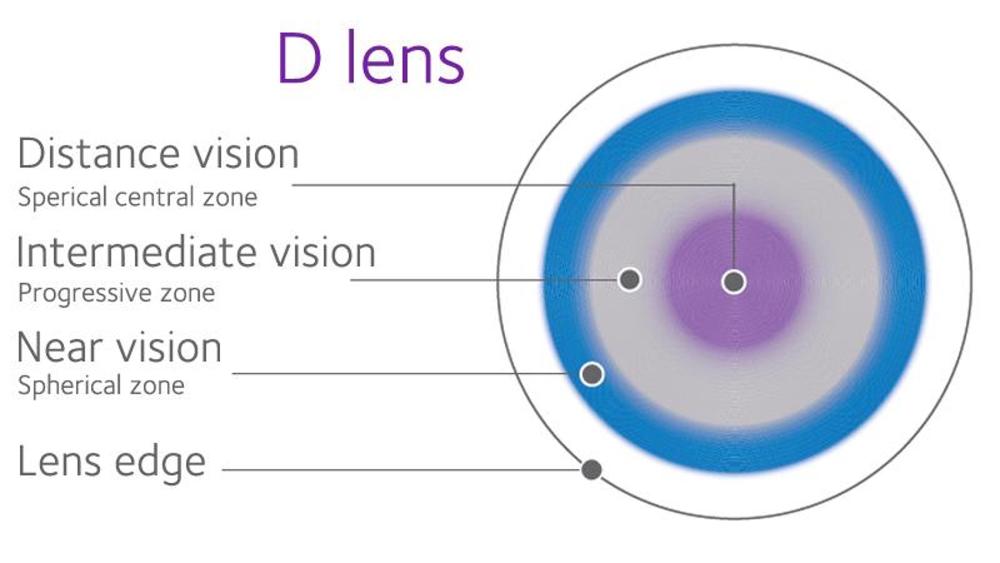
These lens designs were originally made for presbyopia and are not approved for myopia control in children. However, Biofinity® Multifocal lenses may be considered off-label for children who cannot be fitted with, or whose prescriptions are too high for, other soft contact lens options. One clinical trial showed that the +2.50 D (center-distance) design slowed myopia progression and was well tolerated by children. The +1.50 D design, however, was not effective. Another study using historical controls showed that Proclear® Multifocal +2.00 D (center-distance) lenses also helped slow myopia progression.
A toric design is available, but it has not been tested for myopia control in children with astigmatism. Monthly replacement lenses like these can be suitable for children who understand and can maintain good contact lens hygiene.
Visit the Biofinity® Multifocal website.
Articles on Biofinity® Multifocal.
Contact lens options for myopia in children
Explore how children with myopia can achieve clear vision and a more stable prescription with contact lenses.
Soft contact lenses for myopia control in children
Contact lenses are a beneficial alternative to spectacles for correcting vision, and are increasingly used for slowing myopia progression in children.
Soft contact lenses for myopia control in teenagers
Soft contact lens wear can improve confidence and participation in daily activites for teenagers compared to glasses, and also slow myopia progression.
How do myopia control soft contact lenses work?
Special soft contact lens designs that direct a portion of light rays to focus in front of the retina have been shown to slow myopia progression in children.
Which is the best option for myopia control?
Explore the proven treatments for myopia control – including glasses, soft contact lenses, orthokeratology, atropine eye drops, and light therapies.