
Myopia in children.
Myopia often begins to develop between the ages of 7 and 13, when children are experiencing a fast rate of growth. It can be caused when the eyeball grows too quickly, or continues to grow after age 10–12, when eye growth should normally stop. Genetics, environment and the child’s individual characteristics can all contribute to this excess growth.
Let's take a look at the symptoms of myopia in children, how to pursue a diagnosis, and what you can do to manage myopia in children in this age category.
Symptoms of myopia in children.
As they start going to school, reading, and interacting regularly with other children, this is often the time when short-sightedness is first noticed by children and their parents.
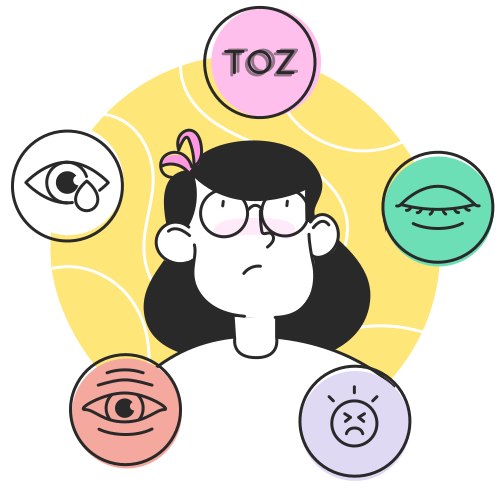
Some of the common symptoms of myopia in children include:
- Complaining of blurry vision
- Holding objects close to their face
- Sitting very close to screens
- Squinting or closing one eye to see better
- Frequent eye rubbing
- Excess blinking
- Watery eyes
- Frequent headaches
If you notice any of these symptoms, or your child mentions that they are struggling to focus on objects that are further away, it’s important to book an appointment with an eye care professional.

Managing myopia in children.
If an eye exam shows that your child is myopic, they will need to be fitted with spectacles or contact lenses to see clearly. For children, glasses are the most common solution, although contact lenses are also an option. Children can often handle them well at an early age, and research has shown that contact lens wear in children improves their confidence and ability to participate in school and sport activities compared to when wearing spectacles.
While standard spectacles are able to correct blurred distance vision in children, they won’t slow down the worsening of myopia. There are, however, special types of spectacles and contact lenses available for children that not only correct their vision but also work to slow down the rate of myopia progression. Your eye care professional may also suggest the use of atropine eye drops to slow progression of myopia in children, although they will still need spectacles or contact lenses to correct their blurred vision.
Children in this age category are still growing, and doing so very quickly. It’s therefore important to regularly return to an eye care professional to assess changes to your child’s vision, and to replace glasses that they have outgrown. It’s also important that any changes to their vision are corrected with an updated prescription to avoid the onset of blurred vision between eye tests.
To slow the worsening of myopia, in addition to using the special types of spectacles, contact lenses or atropine eye drops, try to limit the time that your child spends using screens, and encourage them to spend more time outside.
Age-specific content for children with myopia.
Take a look at the blogs below for further information about myopia in children, or head to our knowledge centre for more insights and support.