
成人の近視
小児期に始まった近視は、通常18歳から21歳の間に進行が止まります。この年齢では視力はあまり変わらない傾向がありますが、成人(18~40歳)の約40%は20代になっても視力の変化を経験しています。子供の頃は視力が良かったとしても、大人になってから近視になることがあります。これは、近業(近くを長時間見ること)や、屋外で過ごす時間が少ないなどの環境要因によって引き起こされます。
ここでは、成人の近視と、その進行を抑える方法についてご紹介します。
成人の近視の症状
成人は、自分の視力の変化を自覚していることが多いので、自ら眼科で視力検査を受けて症状を確認することができます。
成人によくみられる近視の症状には、次のようなものがあります。
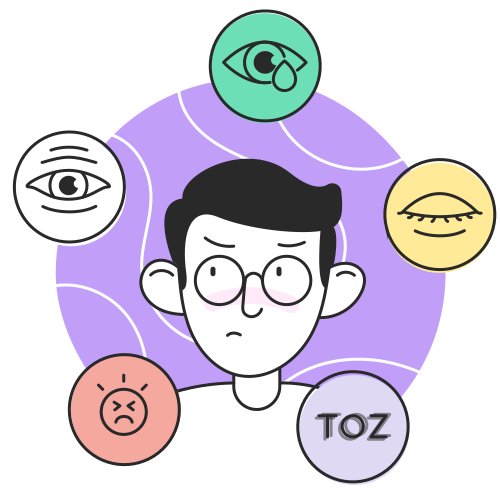
- 視界がぼやけて見える
- 顔にものを近づける
- 画面のすぐ近くに座る
- ものを見るとき、目を細めたり片目を閉じたりする
- 目を頻繁にこする
- 瞬きの回数が多い
- 涙目になる
- 頭痛が頻繁に起こる
このような症状がある場合、または遠くが見づらい場合は、眼科医の診察を受けることをお勧めします。車やバイクの運転をする場合は、特に重要です。
成人の近視の管理
お子様が成人になると、一緒に住んでいない等の理由で保護者が関わる機会は少なくなりますが、近視のこと・近視の原因・合併症についてしっかり理解してもらうことが大切です。
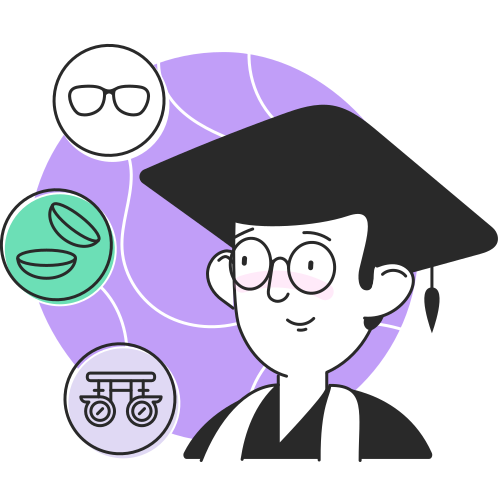
近視の成人は、遠くをはっきりと見るためにメガネやコンタクトレンズが必要です。一般的なメガネやコンタクトレンズでは、遠くのぼやけた見え方を矯正することはできますが、近視の進行を遅らせることはできません。視力を矯正し、近視の進行を遅らせる効果のある特殊なメガネやコンタクトレンズもありますが、成人への有効性を示す科学的根拠はほとんどありません。アトロピン点眼薬は、小学生や中学生・高校生には近視の進行を遅らせる効果があるとされていますが、成人にはそのような科学的根拠はありません。
近視が進行中の成人の場合、これらの特殊なメガネやコンタクトレンズが適しているかどうかを眼科医に相談するのもよいでしょう。近視の進行が止まっている若年成人の場合は、現在の処方が適切かどうかを確認するため、また目の健康状態を調べるために、定期的な眼科の受診が必要です。
近視の成人を対象とした年齢別コンテンツ
Take a look at the articles below for further information about myopia in young adults, or head to our knowledge centre for more insights and support.
Can myopia affect only one eye, or is it always both?
Myopia causes blurred distance vision, but does it always affect both eyes?
Do blue light glasses actually work?
Is blue light harmful, and do blue light glasses really help with eye strain, sleep, or eye health? Here’s what the research says.
Adjusting to New Glasses: Why New Glasses Feel Strange at First
Experiencing eye strain in your new glasses? Find out how long to expect to adapt to your new lenses, and expert tips to help you adjust more comfortably.
Autorefraction: what to expect
Autorefraction is a quick, automated eye test that estimates a person’s prescription. It is commonly used as a starting point for a full eye examination.
All about the 20-20-20 rule for tackling eye strain
People are spending more time on electronic devices than ever before. The 20-20-20 rule is a simple eye exercise to relax the eyes from prolonged screen use.
How do glasses lenses correct vision?
Myopia and astigmatism are common vision conditions in children. Glasses can adjust how light enters the eye, allowing images to focus clearly on the retina. Prescription lenses help focus light accurately inside the eye so that people with myopia, hyperopia, or astigmatism can see clearly.
Corneal topography: what to expect
Corneal topography is an imaging test that is used to map the shape and curvature of the cornea – the clear, front surface of the eye.
Axial length measurement: what to know
Axial length is the length of the eye from the front to the back, and is a key measurement of the eye
Sunglasses and sun protection for children's eyes
How to keep your child safe in the sun with simple tips on sunglasses, hats, shade, and healthy outdoor habits.