
中学生・高校生の近視
近視は通常、眼球の過剰な成長によって引き起こされ、網膜上でピントが合う位置が変化し視力が低下します。7歳から13歳の間に始まることが多く、10代を通して進んでいきます。思春期の中学生・高校生は急速に成長するため、この時期に初めて近視になることが多いようです。
中学生・高校生の近視の症状、近視の疑いがある場合の対処方法、視力の管理方法についてご紹介します。
中学生・高校生の近視の症状
中学生・高校生は自分の体の変化を認識できるため、視力の低下にも気付くことが多いです。学校では板書を見る機会が多いため、見づらさを自覚しやすいでしょう。教室で前の方の席に座らないと板書が見づらい場合は、近視の兆候があると言えます。
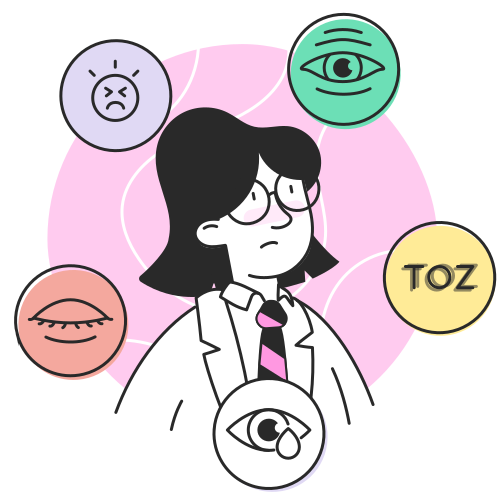
中学生・高校生によくみられる近視の症状には、次のようなものがあります。
- 視界がぼやけて見える
- 顔にものを近づける
- 画面のすぐ近くに座る
- ものを見るとき、目を細めたり片目を閉じたりする
- 目を頻繁にこする
- 瞬きの回数が多い
- 涙目になる
- 頭痛が頻繁に起こる
このような症状に気づいた場合や、お子様が遠くのものを見づらい場合は、眼科医の診察を受けることをお勧めします。特に、お子様が車やバイクの運転免許を取得する予定がある時は注意が必要です。
中学生・高校生の近視の管理
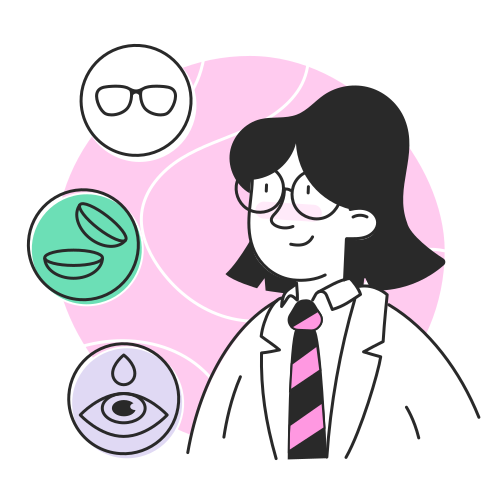
お子様の視力を改善し、遠くをはっきりと見えるようにするには、メガネやコンタクトレンズの処方が必要です。中学生・高校生はコンタクトレンズを自分で管理できるため、良い選択肢と言えます。また、メガネをかけている中学生・高校生よりもコンタクトレンズを使っている中学生・高校生の方が、自信を持ち学校生活やスポーツ活動に取り組めるという研究結果もあります。
一般的なメガネは、遠くのぼやけた見え方を矯正することはできますが、近視の進行を遅らせることはできません。しかし、小学生や中学生・高校生用の特殊なメガネやコンタクトレンズは、視力を矯正するだけでなく、近視の進行スピードを遅らせることができます。また、近視の進行を遅らせるためにアトロピン点眼薬をお勧めすることもありますが、それでもなお、遠くのぼやけた見え方を矯正するためにメガネやコンタクトレンズが必要です。
近視の進行を遅らせるために、専用のメガネやコンタクトレンズ、アトロピン点眼薬を使うだけでなく、デジタル機器の画面を見る時間を制限し、屋外で過ごす時間を増やしましょう。 これらは中学生・高校生には特に難しいことなので、ぜひ参考情報のページでアドバイスやサポートを受けてみてください。
近視の中学生・高校生を対象とした年齢別コンテンツ
Take a look at the articles below for further information about myopia in teenagers, or head to our knowledge centre for more insights and support.
NaturalVue Enhanced Multifocal contact lenses: parents’ guide
We explore all about the NaturalVue Enhanced Multifocal contact lens, from its unique design for myopia control, to its interesting features, and which children might it best be suitable for.
Do blue light glasses actually work?
Is blue light harmful, and do blue light glasses really help with eye strain, sleep, or eye health? Here’s what the research says.
Adjusting to New Glasses: Why New Glasses Feel Strange at First
Experiencing eye strain in your new glasses? Find out how long to expect to adapt to your new lenses, and expert tips to help you adjust more comfortably.
Mark’ennovy MYLO contact lenses: parents’ guide
We explore Mark’ennovy MYLO, a monthly disposable soft contact lens designed for myopia management using extended depth of focus technology.
Autorefraction: what to expect
Autorefraction is a quick, automated eye test that estimates a person’s prescription. It is commonly used as a starting point for a full eye examination.
All about the 20-20-20 rule for tackling eye strain
People are spending more time on electronic devices than ever before. The 20-20-20 rule is a simple eye exercise to relax the eyes from prolonged screen use.
How do glasses lenses correct vision?
Myopia and astigmatism are common vision conditions in children. Glasses can adjust how light enters the eye, allowing images to focus clearly on the retina. Prescription lenses help focus light accurately inside the eye so that people with myopia, hyperopia, or astigmatism can see clearly.
Menicon Bloom Day contact lenses: parents’ guide
We look at Menicon Bloom Day soft contact lenses, how they are designed to manage myopia, and whether they may be suitable for your child.
Corneal topography: what to expect
Corneal topography is an imaging test that is used to map the shape and curvature of the cornea – the clear, front surface of the eye.