
小学生の近視
近視は、子供の成長スピードが速い7歳から13歳の間に始まることが多いです。眼球の成長が早すぎる場合や、通常は目の成長が止まるはずの10~12歳以降にも成長が続く場合などに起こります。遺伝、環境、子供の個々の特性はすべて、眼球の過剰な成長の原因となり得ます。
ここでは、小学生の近視の症状、診断の進め方、近視の管理方法についてご紹介します。
小学生の近視の症状
小学校に通い始め、本を読んだり、他の子供たちと交流するようになると、お子様や保護者が初めて近視に気づくことが多いようです。
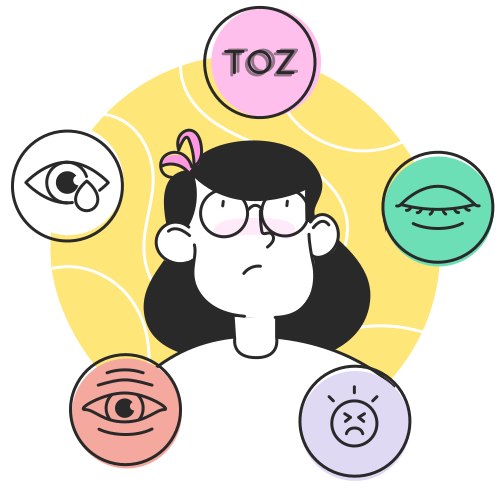
小学生によくみられる近視の症状には、次のようなものがあります。
- 視界がぼやけて見える
- 顔にものを近づける
- 画面のすぐ近くに座る
- ものを見るとき、目を細めたり片目を閉じたりする
- 目を頻繁にこする
- 瞬きの回数が多い
- 涙目になる
- 頭痛が頻繁に起こる
このような症状に気付いた場合や、お子様が遠くのものを見づらい場合、眼科医の診察を受けることをお勧めします。
小学生の近視の管理
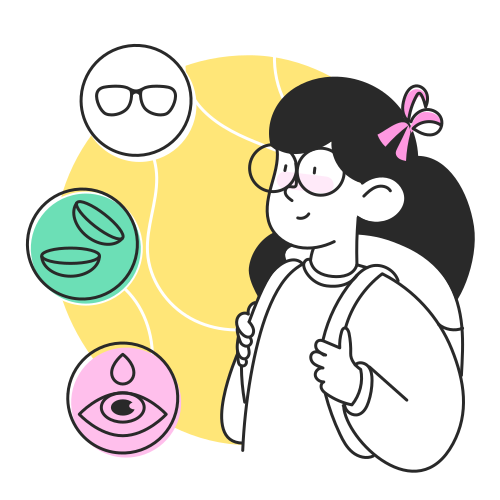
眼科の検査で近視と診断された場合、遠くをはっきりと見るためにはメガネやコンタクトレンズが必要になります。小学生の場合、メガネが最も一般的ですが、コンタクトレンズも選択肢のひとつです。小学生であれば、コンタクトレンズを上手く扱えることが多いです。また、メガネをかけている子供よりもコンタクトレンズを使っている子供の方が、自信を持ち学校生活やスポーツ活動に取り組めるという研究結果もあります。
一般的なメガネは、遠くがぼやけて見えるのを矯正することはできますが、近視の進行を遅らせることはできません。しかし、子供用の特殊なメガネやコンタクトレンズは、視力を矯正するだけでなく、近視の進行スピードを遅らせることができます。また、小学生のお子様には、近視の進行を遅らせるためにアトロピン点眼薬をお勧めすることもありますが、それでもなお、遠くがぼやけて見えるのを矯正するためにメガネやコンタクトレンズが必要です。
小学生の子供はどんどん成長します。そのため、定期的に眼科医の診察を受け、お子様の視力の変化をチェックし、度数が合わなくなったメガネは交換することが重要です。また、視力の変化があった場合、視界がぼやけて見えることがないよう、その時点で最も適した処方箋で矯正することが大切です。
近視の進行を遅らせるために、専用のメガネやコンタクトレンズ、アトロピン点眼薬を使うだけでなく、デジタル機器の画面を見る時間を制限し、屋外で過ごす時間を増やしましょう。
近視の小学生を対象とした年齢別コンテンツ
小学生の近視に関する詳しい情報は、以下の記事をご覧ください。また、参考情報のページでは、さらに詳細な情報やサポートを提供しています。
How do contact lenses work?
Contact lenses are small, thin, transparent discs that are worn on the eye for vision correction, as well as other medical and decorative purposes.
Can myopia affect only one eye, or is it always both?
Myopia causes blurred distance vision, but does it always affect both eyes?
NaturalVue Enhanced Multifocal contact lenses: parents’ guide
We explore all about the NaturalVue Enhanced Multifocal contact lens, from its unique design for myopia control, to its interesting features, and which children might it best be suitable for.
Do blue light glasses actually work?
Is blue light harmful, and do blue light glasses really help with eye strain, sleep, or eye health? Here’s what the research says.
Adjusting to New Glasses: Why New Glasses Feel Strange at First
Experiencing eye strain in your new glasses? Find out how long to expect to adapt to your new lenses, and expert tips to help you adjust more comfortably.
Mark’ennovy MYLO contact lenses: parents’ guide
We explore Mark’ennovy MYLO, a monthly disposable soft contact lens designed for myopia management using extended depth of focus technology.
Autorefraction: what to expect
Autorefraction is a quick, automated eye test that estimates a person’s prescription. It is commonly used as a starting point for a full eye examination.
All about the 20-20-20 rule for tackling eye strain
People are spending more time on electronic devices than ever before. The 20-20-20 rule is a simple eye exercise to relax the eyes from prolonged screen use.
ZEISS MyoCare lenses: parents’ guide
ZEISS MyoCare is a myopia management solution from ZEISS that can help support myopia control in children.